
Shockwave Therapy Podiatrist Adelaide
It may sound a little daunting, however, shockwave therapy is a non-invasive treatment ideal for a range of feet ailments. With no medicine, anaesthesia or surgery required, it encourages natural healing in your foot’s bones, tendons and soft tissues. Highly regarded by podiatrists, shockwave therapy boasts a high success rate – even with chronic, long term conditions.
Increased Mobility
After just a single session, you can expect to enjoy some increased mobility and pain relief from conditions such as:
- Plantar fasciitis
- Achilles tendonitis
- Heel spurs
- Heel bursitis
The Science behind Shockwave Therapy
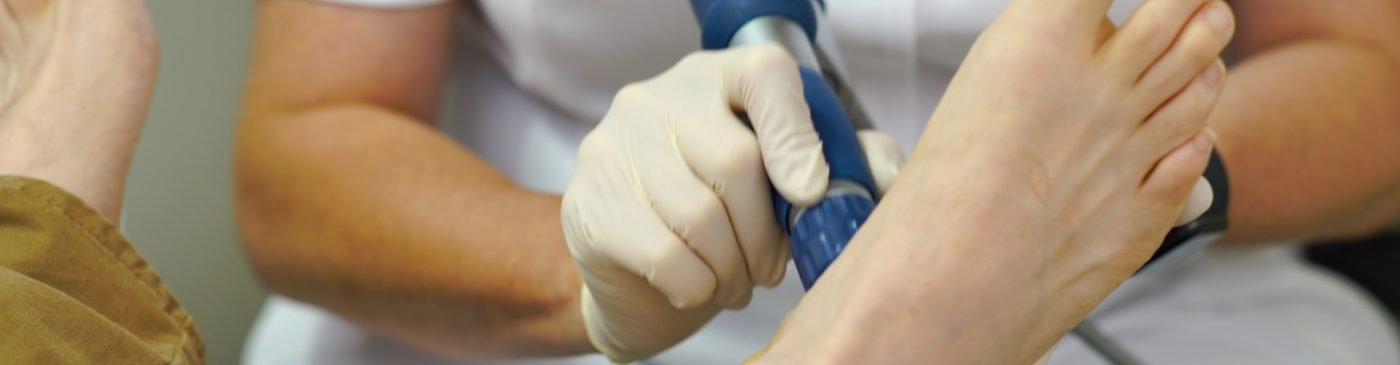
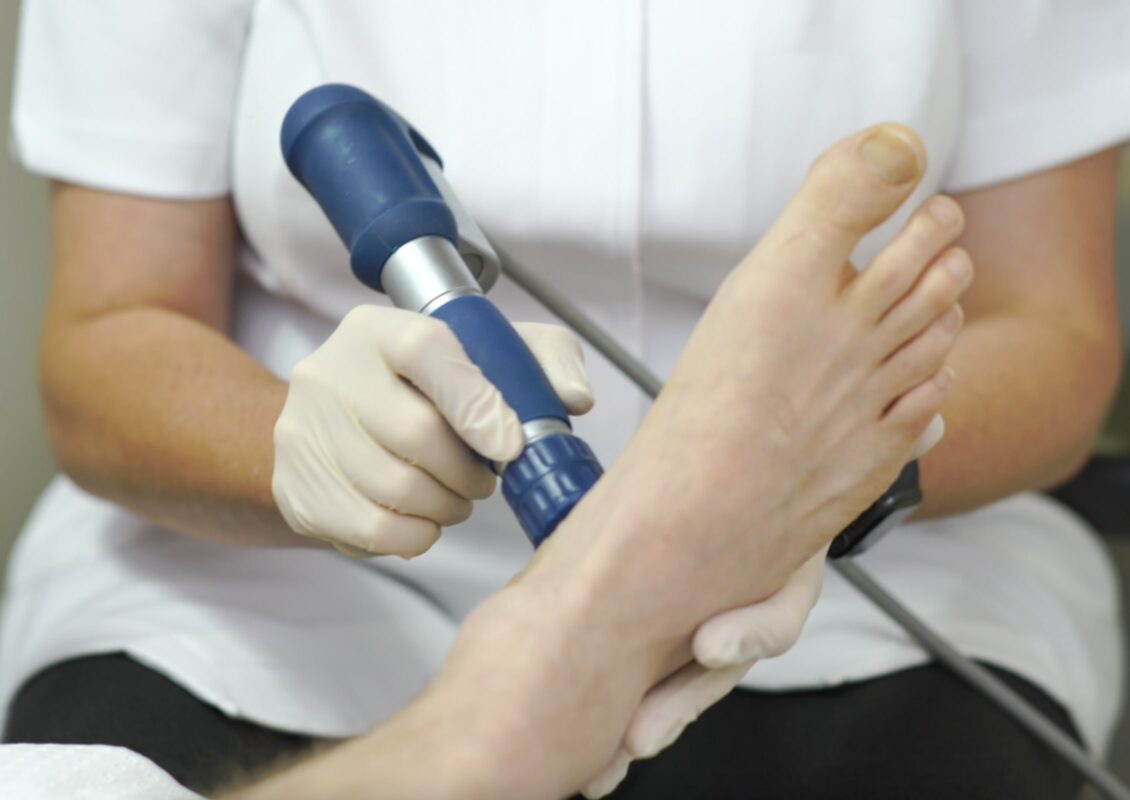
Clinically proven, shockwave therapy involves using a highly advanced probe to pulsate high energy acoustic waves into your foot – 2,000 waves to be precise. These acoustic waves expand inside your foot and accelerate your body’s natural healing responses. Due to an increase in blood flow, tissue regeneration is stimulated and scar tissue starts to dissipate.
What to expect during Shockwave Therapy
Put simply, a gel will be applied to your heel and a probe then circulated around the affected area. You may feel an initial numbness or tingling within the foot, but after 5-10 minutes of treatment you’ll feel a marked improvement in your symptoms, for up to five days. Our experienced podiatrists will formulate a personalised treatment plan and typically only 3-4 sessions are needed to successfully treat your plantar fasciitis or Achilles tendonitis.
GET IN TOUCH
Have a Question?
Send us a message and we’ll be in touch with you right away.
We’ll never share your details with anyone else.
Claim Shockwave Therapy Treatments
Depending on your level of cover, you can claim shockwave therapy treatments through your health insurance fund. Just present your membership card to our friendly reception staff and we will process your claim for you.
Our Brighton Road Podiatry team is highly trained in the use of shockwave therapy, so start your journey to a pain-free, active life by calling us on 08 8298 4166
Shockwave Therapy - FAQ
Does shockwave therapy hurt?
Most patients describe the sensation as mild discomfort rather than pain — similar to a strong tapping or tingling feeling. The intensity of the treatment can be adjusted to your tolerance, and your podiatrist will check in with you throughout the session. No anaesthetic is required, and any discomfort during the treatment usually settles immediately afterwards.
Is shockwave therapy safe? Are there any side effects?
Shockwave therapy has an excellent safety profile and is well established in clinical use. Side effects, when they occur, are typically mild and short-lived — these may include temporary redness, mild bruising, or some tenderness in the treated area for 24 to 48 hours after the session.
Shockwave is not suitable for everyone. Your podiatrist will discuss your medical history at your initial assessment and let you know if it’s appropriate for you. Conditions that may exclude shockwave therapy include pregnancy, certain blood-clotting disorders, and treatment over open wounds or infections.
How does shockwave therapy compare to other treatments?
Shockwave therapy is one of several treatment options for chronic foot pain. Compared to alternatives, it’s non-invasive (unlike surgery or cortisone injections), requires no anaesthetic and no downtime, and addresses the underlying tissue dysfunction rather than just masking pain.
It’s often used alongside other treatments — such as custom orthotics, stretching programs, or footwear changes — for the best overall outcome. Your podiatrist will discuss whether shockwave therapy on its own, or as part of a combined treatment plan, is most appropriate for your condition.
How quickly will I notice an improvement?
Most patients notice a marked improvement in their symptoms within a few hours of their first treatment, with relief lasting up to five days following each session. Improvement is generally cumulative — symptoms typically reduce further with each subsequent session as the tissue heals. Some patients require the full course of treatment before noticing significant lasting change, particularly those with very long-standing conditions.

YOU CAN EXPECT
Experience, Understanding and Respect
Brighton Road Podiatry can help young and old patients from general to high risk podiatry, such as providing extensive vascular examination and complex wound care, orthotics and more.